The Next World Reserve Currency
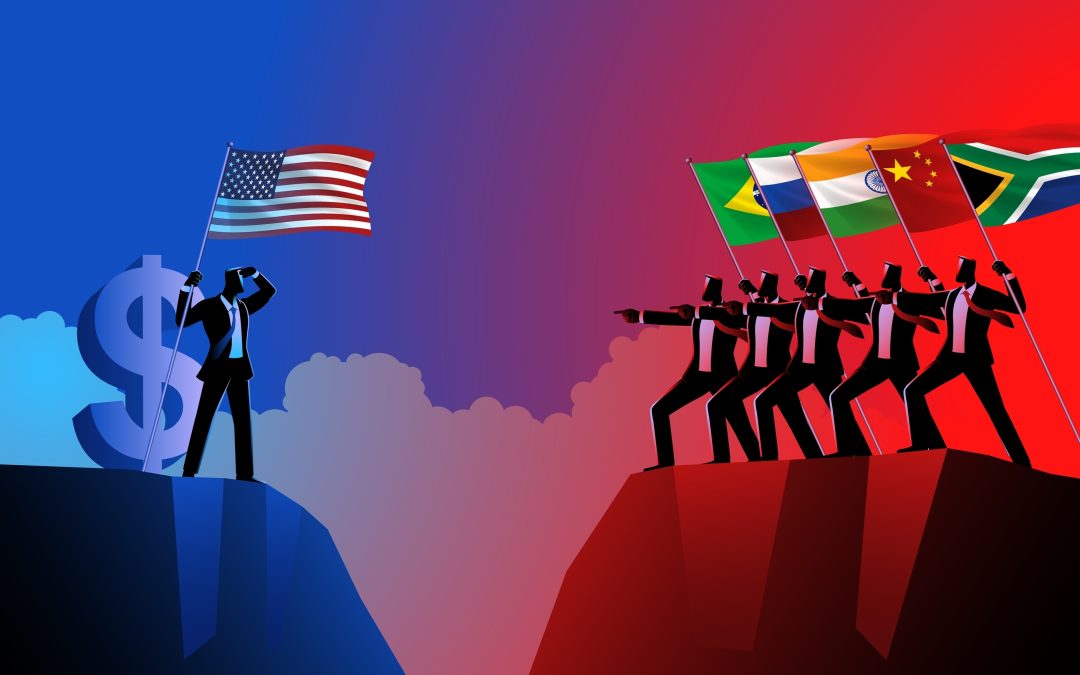
The U.S. dollar has dominated global finance for more than 80 years. But as central banks diversify reserves, gold gains importance, and alternative payment systems expand, the next reserve system may not belong to a single currency at all.
Macrofinance
macrofinance.world
The global monetary system is slowly moving away from the dollar's absolute dominance. This blog explores how the post-1971 monetary order emerged, why countries are diversifying into gold and alternative currencies, how debt and inflation shape modern fiat systems, and why the next reserve system could be multipolar rather than controlled by a single currency.
The Next World Reserve Currency
For more than 80 years, the U.S. dollar has been the foundation of the global financial system.
International trade, oil markets, central bank reserves, and global debt have all revolved around one currency.
But today, a growing number of economists, investors, and policymakers believe that era is beginning to change.
The shift isn't happening overnight, and it doesn't necessarily mean the dollar is about to collapse.
Instead, the world appears to be entering a new monetary transition—one where financial power becomes more distributed, countries diversify away from dollar dependence, and alternative reserve assets like gold gain renewed importance.
The real question isn't whether the dollar disappears.
It's what replaces its absolute dominance.
The World Before The Dollar
Before modern fiat currencies existed, money represented something tangible.
Throughout the early twentieth century, paper currency could often be exchanged directly for precious metals.
Gold certificates and silver certificates weren't money themselves—they were simply claims on real money stored inside bank vaults.
Banks existed primarily to safeguard those reserves.
This "hard money" system meant governments couldn't create unlimited currency because every note had to be backed by actual gold or silver.
That changed dramatically in 1971.
Facing rising deficits and growing pressure on U.S. gold reserves, President Richard Nixon suspended the convertibility of the dollar into gold, effectively ending the Bretton Woods monetary system.
For the first time, the world's reserve currency was backed only by confidence.
The Dollar's New Role
After leaving the gold standard, a completely different monetary system emerged.
Instead of being backed by gold, the dollar became backed by global demand.
Countries around the world agreed to:
- Price international trade in dollars.
- Hold dollar reserves.
- Purchase U.S. Treasury bonds.
- Reinvest trade surpluses into American financial markets.
This created what many economists call the dollar-based global monetary order.
The system benefited everyone—but especially the United States.
America could:
- Import more than it exported.
- Borrow at lower interest rates.
- Run persistent trade deficits.
- Expand government debt.
- Build the world's deepest financial markets.
As long as the world continued demanding dollars, the system remained remarkably stable.
Why Countries Are Diversifying
Today, that stability is beginning to change.
Rather than abandoning the dollar entirely, central banks are increasingly diversifying their reserves.
Instead of holding only U.S. Treasuries, many countries are accumulating:
- Gold
- Silver
- Alternative currencies
- Regional payment systems
China has expanded payment infrastructure that reduces dependence on Western banking systems.
BRICS nations have discussed increasing trade settlement outside the dollar.
Central banks have purchased record amounts of gold over recent years, reflecting a desire to own reserve assets that are independent of any single country's monetary policy.
This doesn't mean the dollar is being replaced tomorrow.
It means countries no longer want every financial risk tied to one currency.
Why A Weaker Dollar Might Actually Be Intentional
Many people assume governments always want their currency to remain as strong as possible.
In reality, it's more complicated.
There are effectively two different versions of the American economy.
Financial America
This economy benefits from:
- A strong dollar
- Cheap imports
- Rising financial assets
- Low borrowing costs
- Expanding debt markets
Over the past four decades, much of America's economic growth came from finance rather than manufacturing.
Cheap imports reduced consumer prices while corporations increasingly shifted production overseas.
A strong dollar made Americans feel wealthier because foreign goods became cheaper.
Productive America
Manufacturing tells a different story.
A strong currency makes exports more expensive.
Higher labor costs reduce competitiveness.
Domestic factories struggle against lower-cost international production.
If the U.S. wants to rebuild manufacturing, energy production, and industrial capacity, a somewhat weaker dollar can actually help by making American goods more competitive globally.
In other words:
A strong dollar benefits consumers.
A weaker dollar can benefit producers.
The challenge is that transitioning from one model to another is rarely painless.
Measuring Wealth The Wrong Way
One of the more interesting ways to understand currency debasement is by measuring labor against hard assets rather than dollars.
Consider federal minimum wage.
In the late 1960s:
- Minimum wage: roughly $1.40/hour.
- One week of work could purchase approximately 1.6 ounces of gold.
Today:
- Minimum wage is much higher in nominal terms.
- But buying the same amount of gold requires dramatically more working hours.
The number printed on paychecks has increased.
The purchasing power behind those dollars has changed far more slowly.
This is why many investors argue that inflation isn't simply rising prices.
It's declining purchasing power.
The Debt Problem
Modern fiat systems rely heavily on debt.
Debt functions because new money continually enters the economy.
A simplified example illustrates the concept.
Imagine only $10 existed in the entire world.
Someone lends you that $10 with 1% interest.
Where does the extra money needed to pay interest come from?
It doesn't exist.
The system requires expansion.
This is why modern monetary systems depend on:
- Credit growth
- Economic expansion
- New borrowing
- Increasing money supply
Without continual growth, debt becomes increasingly difficult to service.
Gold Is Quietly Returning
While headlines focus on stocks, AI, or cryptocurrencies, central banks have been buying enormous quantities of gold.
This matters because reserve managers typically think decades ahead—not quarters.
Recent regulatory changes under Basel III have also increased gold's attractiveness by improving how banks treat physical gold on their balance sheets.
Gold isn't replacing Treasuries overnight.
But it is becoming increasingly important as a neutral reserve asset that doesn't depend on another country's fiscal policy.
For many nations, that's becoming increasingly attractive.
Is The Dollar Losing Reserve Status?
Not exactly.
The dollar still dominates:
- Global trade
- International lending
- Foreign exchange reserves
- Financial markets
However, dominance doesn't need to disappear to become weaker.
If countries gradually reduce the percentage of reserves held in dollars while increasing allocations to gold or regional currencies, the dollar's influence naturally declines over time.
It's diversification—not abandonment.
The Four Power Centers Shaping The New System
This transition isn't being driven by one institution.
Instead, several major groups have overlapping incentives.
1. Financial Institutions
Large asset managers, banks, and financial firms benefit from controlling capital flows.
Their wealth is measured through ownership of productive assets rather than cash itself.
Inflation often increases the nominal value of those assets.
2. Nation States
Governments increasingly want:
- Domestic manufacturing
- Energy independence
- Secure supply chains
- Reduced dependence on foreign financial systems
A somewhat weaker currency can improve export competitiveness and encourage domestic production.
3. Technology
As financial systems become more digital, technology companies gain influence.
Digital payments, AI infrastructure, identity verification, cybersecurity, and financial platforms all become increasingly important during periods of economic transition.
4. Defense And Geopolitics
Periods of changing global power frequently coincide with:
- Higher defense spending
- Strategic resource competition
- Energy security initiatives
- Regional alliances
Economic shifts rarely occur in isolation from geopolitics.
Inflation Or Deflation?
Nobody knows exactly how this transition unfolds.
There are two broad possibilities.
Inflation Scenario
If interest rates fall while governments continue running large deficits:
- More liquidity enters markets.
- Asset prices may continue rising.
- Real estate, commodities, and equities could appreciate.
- Purchasing power may continue eroding.
In this world, portfolios rise—but everyday expenses may rise just as quickly.
Deflation Scenario
Alternatively:
- Investors could lose confidence.
- Capital could leave financial markets.
- Interest rates remain elevated.
- Asset prices decline.
This would likely be more painful in the short term but cannot be ruled out entirely.
Reality may ultimately include elements of both.
So What Could Become The Next Reserve Currency?
The answer may surprise many people.
It probably isn't a single currency.
Instead, the future may look far more diversified.
Rather than replacing the dollar with another dominant currency, the world could gradually shift toward a system where reserves include:
- U.S. dollars
- Gold
- Regional currencies
- Digital payment networks
- Strategic commodities
This would represent a move from a unipolar monetary system toward a multipolar one.
The dollar remains important—but no longer stands entirely alone.
The Bottom Line
The debate over the next reserve currency isn't really about predicting the collapse of the U.S. dollar.
It's about understanding that the global financial system is evolving.
Countries are buying more gold.
Trade settlement is becoming more regional.
Alternative payment systems are expanding.
Central banks are diversifying reserves.
None of these developments individually end dollar dominance.
Together, however, they suggest that the monetary order established after 1971 is slowly being reshaped.
Whether that transition ultimately leads to inflation, deflation, stronger regional currencies, or a greater role for gold remains uncertain.
But one thing appears increasingly clear:
The next world reserve system may not belong to a single currency at all—it may belong to a world where financial power is shared rather than concentrated.