China Just Broke the Silver Market
China has quietly changed the global silver market by tightening export controls and strengthening its grip over refining. Here's why silver is becoming a geopolitical weapon—not just a precious metal.
Macrofinance
macrofinance.world
China is tightening its control over silver refining and exports as industrial demand rises across AI, clean energy, defense, and advanced manufacturing. With physical supply already constrained and China dominating key parts of the refining process, silver is becoming more than a precious metal, it is becoming a strategic source of geopolitical leverage.
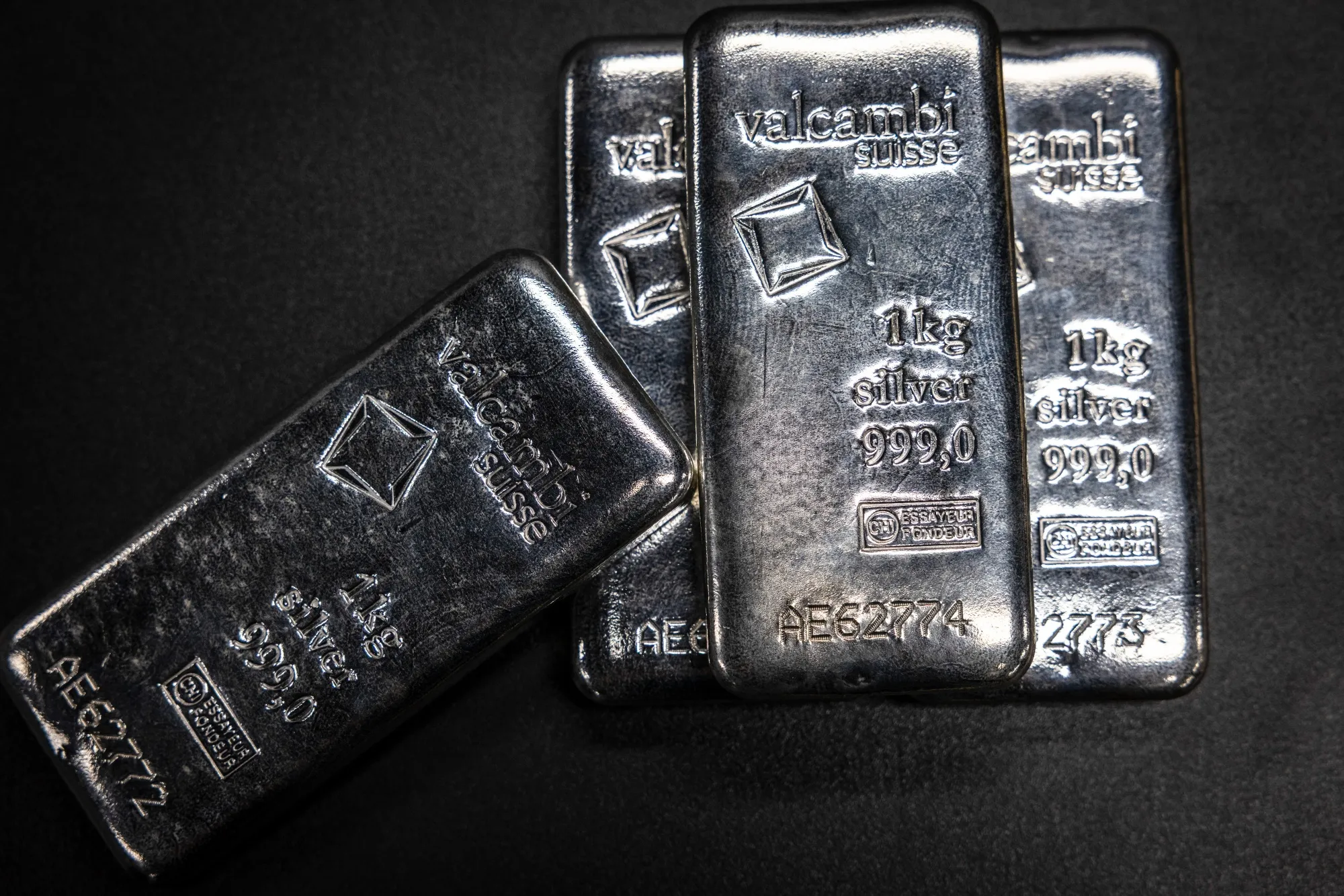
For years, gold has dominated conversations about the future of money. Central banks have been buying record amounts, BRICS nations have discussed alternatives to the U.S. dollar, and investors have viewed gold as protection against inflation and geopolitical uncertainty.
But while everyone was watching gold, China was quietly making a move that could reshape an entirely different market.
Silver.
This year, silver has outperformed nearly every major asset class. More importantly, China has begun tightening control over one of the world's most critical industrial metals by restricting how it leaves the country. At first glance, that might sound like just another commodity policy.
It isn't.
This is part of a much larger strategy involving global manufacturing, artificial intelligence, clean energy, military technology, and the shifting balance of economic power between China and the United States.
Because unlike gold—which primarily represents trust in money—silver represents something arguably even more important in the modern world:
Control over industry itself.
Why Silver Is Different From Gold
Although both are precious metals, gold and silver serve completely different purposes.
Gold is primarily a monetary asset.
Central banks accumulate it because it provides confidence in a country's reserves. It has thousands of years of history as money and remains one of the world's ultimate stores of value.
Silver, however, is consumed.
Once silver enters manufacturing, much of it never returns to investment markets.
It powers:
- Solar panels
- Electric vehicles
- AI servers and data centers
- Smartphones
- Military electronics
- Satellites
- Medical equipment
- High-performance batteries
- Semiconductor manufacturing
Silver also happens to be one of the best electrical conductors on Earth.
That creates a major difference.
If gold becomes expensive, investors simply buy less.
If silver becomes expensive, manufacturers often cannot stop buying.
Factories still need silver regardless of its price.
The Market Has a Hidden Problem
Most people assume commodity markets work the same way.
Prices rise.
Producers mine more.
Supply catches up.
Prices stabilize.
Silver doesn't work that way.
Nearly 70–80% of global silver production is actually a by-product of mining other metals like copper, lead and zinc.
Very few mines exist solely to produce silver.
That means even if silver prices doubled overnight, miners cannot simply double production.
They would first need significantly more mining of entirely different metals.
Economists call this inelastic supply.
Demand can surge quickly.
Supply cannot.
That imbalance is exactly what makes silver so strategically important.
COMEX vs Shanghai: Two Different Silver Markets
Understanding today's silver market requires understanding that there are effectively two pricing systems.
COMEX (United States)
The COMEX futures exchange serves as the world's benchmark for silver pricing.
Most contracts here never result in physical delivery.
Instead:
- Investors speculate
- Traders hedge
- Contracts are rolled over
- Positions settle in cash
Only a relatively small portion actually results in physical silver changing hands.
Shanghai (China)
Shanghai operates very differently.
Prices there reflect actual physical delivery inside China.
Manufacturers buying silver for production are purchasing real metal—not simply paper contracts.
Normally, these two markets remain closely aligned.
Arbitrage traders buy silver where it's cheaper and sell it where it's more expensive, keeping prices nearly identical.
But recently something unusual happened.
The Price Gap That Shouldn't Exist
Silver in Shanghai began trading roughly $5–6 per ounce above COMEX prices.
Historically, that premium is usually less than $1.
Rarely does it exceed $2.
So why didn't arbitrage eliminate the difference?
Because physical silver wasn't moving freely.
When arbitrage stops working, it often signals that physical supply—not paper supply—is becoming constrained.
It's one of the clearest signs that industrial demand is beginning to overwhelm available inventories.
Western Silver Inventories Are Surprisingly Small
Inside COMEX-approved vaults, silver exists in two categories:
Eligible Silver
Metal simply stored on behalf of owners.
Not available for delivery.
Registered Silver
Silver specifically available to settle futures contracts through physical delivery.
Here's the issue.
Registered silver only represents roughly 120–130 million ounces.
Global annual silver demand exceeds 1.1 billion ounces.
In other words:
Physical silver immediately available for delivery represents only around 10% of one year's global consumption.
COMEX was never designed to supply the world's manufacturing needs.
It works because almost everyone accepts cash settlement instead.
But if more buyers suddenly insist on physical delivery rather than paper exposure, the system begins experiencing stress.
China's Strategy Isn't About Silver Prices
Many people assume China simply wants higher silver prices.
That misses the point.
China isn't trying to speculate.
It's trying to control access.
Just as America's global influence has long depended on the U.S. dollar, China's long-term strategy increasingly revolves around controlling critical industrial supply chains.
Silver fits perfectly into that vision.
Gold Builds Trust. Silver Builds Power.
China's monetary strategy has unfolded in stages.
Over the past two decades it has:
- Built the Shanghai Gold Exchange
- Expanded international gold trading
- Increased official gold reserves
- Promoted alternatives to dollar settlement
- Encouraged gold-backed confidence among trading partners
Gold strengthens confidence in money.
Silver strengthens production.
Together they represent two different forms of geopolitical leverage.
China Learned This Lesson Nearly 100 Years Ago
China's relationship with silver is deeply historical.
For centuries, silver wasn't simply an investment.
It was China's money.
Taxes were paid in silver.
Large commercial transactions settled in silver.
International trade relied heavily on silver.
That system functioned surprisingly well—until the United States intervened indirectly.
The 1934 Shock
In 1934, the U.S. passed the Silver Purchase Act, dramatically increasing government purchases of silver.
Global silver prices surged.
For countries using silver as money, rising prices created a disaster.
Silver began flowing out of China.
Money literally left the economy.
The result was severe deflation.
Businesses delayed investment.
Consumers delayed purchases.
Economic activity slowed dramatically.
Within a year, China abandoned the silver standard entirely.
The lesson was unforgettable:
If another country controls the material your economy depends on, they can weaponize it against you.
Modern China appears determined to ensure that never happens again.
What China Just Changed
Rather than banning silver exports outright, China chose something far more subtle.
It reclassified silver under dual-use export controls.
That means silver is now officially considered important for both civilian and military applications.
As a result:
- Exports increasingly require government approval.
- Licensing becomes selective.
- Authorities gain discretion over who receives supply.
On paper, China can argue it isn't banning exports.
It's simply regulating a strategic material.
In practice, however, this gives Beijing tremendous control over global silver flows.
Why China Has So Much Leverage
China doesn't dominate silver mining.
It dominates something arguably more important:
Refining and processing.
Even when silver is mined in countries like:
- Mexico
- Peru
- Australia
…it frequently passes through Chinese refining infrastructure before becoming usable industrial-grade metal.
**Control the refining.
Control the supply.
Control the market.**
This mirrors China's earlier strategy with rare earth elements.
We've Seen This Strategy Before
Over the last decade, China gradually tightened control over rare earth processing.
Today it controls roughly 80–90% of global rare-earth refining capacity.
Governments initially ignored the risk.
Only after export restrictions appeared did the United States, Europe and Japan begin rebuilding domestic supply chains.
Unfortunately, creating refining capacity isn't fast.
In many cases it takes years—or even decades.
Silver could follow the same path.
Why This Matters for AI
Artificial intelligence isn't built only on software.
It requires enormous physical infrastructure.
Every AI data center depends on:
- Power systems
- High-performance servers
- Cooling equipment
- Electrical connections
Silver appears throughout that infrastructure.
The same applies to:
- Solar expansion
- Electric vehicles
- Robotics
- Advanced semiconductors
- Military modernization
As AI demand accelerates, industrial silver demand likely grows alongside it.
Why Higher Prices Don't Solve the Problem
Normally higher commodity prices encourage new production.
Silver doesn't respond that way.
Since most silver comes as a by-product, increasing supply requires more mining of completely different metals.
That makes shortages much harder to resolve.
Industrial users cannot simply wait.
Production lines continue running.
Governments continue purchasing.
Manufacturers continue consuming.
The result can be extremely sharp price movements whenever supply becomes constrained.
Silver's History of Violent Moves
Silver often spends years doing almost nothing.
Then suddenly it explodes.
History provides multiple examples:
- Late 1960s rallies
- 1970s commodity boom
- 1979–1980 surge from roughly $6 to over $50 per ounce
These moves weren't gradual.
They happened quickly.
Afterward, prices often corrected just as dramatically as speculative money exited the market.
That pattern has repeated multiple times over decades.
This Isn't Really About Silver
Looking only at silver prices misses the broader picture.
This is ultimately about geopolitical leverage.
China appears to be building influence across three interconnected areas:
1. Gold
Strengthening confidence in alternative monetary systems.
2. Silver
Controlling industrial production and critical manufacturing inputs.
3. Rare Earths
Dominating technologies essential for defense, clean energy and advanced electronics.
Together, these resources form the foundation of long-term strategic influence.
The Bigger Picture
The global economy is gradually shifting away from a system dominated entirely by one country.
Instead, multiple regional powers are building independent financial and industrial ecosystems.
China's actions around silver fit neatly into that transition.
By controlling processing, refining and exports of strategically important materials, Beijing gains leverage without firing a single shot.
Countries needing silver for factories, renewable energy or military equipment increasingly depend on supply chains that China heavily influences.
That changes negotiations.
It changes trade.
And eventually, it changes global power.
Final Thoughts
Whether silver reaches new record highs—or experiences another sharp correction—is impossible to predict.
Commodity markets have always been volatile.
But one thing has become increasingly clear:
This story is far bigger than precious metals.
It's about the resources powering artificial intelligence, clean energy, defense systems and the next generation of industrial growth.
Gold may determine who people trust with their money.
Silver may determine who gets to build the future.
And by tightening its grip over one of the world's most essential industrial metals, China has reminded the world that in modern geopolitics, control over supply chains can be just as powerful as control over currencies.